
Gepolariseerde Zonnebril Nadelen: De Eerlijke Waarheid (2026)
Gepolariseerde zonnebrillen worden vaak aangeprezen als de ultieme bescherming tegen verblinding. En terecht: ze filteren horizontaal gereflecteerd licht en zorgen voor scherper, comfortabeler zicht. Maar geen enkel product is perfect. Als je overweegt om een gepolariseerde zonnebril te kopen, wil je ook de nadelen kennen voordat je je geld uitgeeft.
In dit artikel bespreken we eerlijk en volledig de gepolariseerde zonnebril nadelen. We leggen uit in welke situaties polarisatie juist niet handig is, wanneer het wel de beste keuze blijft, en hoe je een weloverwogen beslissing maakt. Wil je eerst weten hoe polarisatie precies werkt? Lees dan onze ultieme gids over gepolariseerde zonnebrillen.
Hoe werkt polarisatie? (Kort overzicht)
Voordat we de gepolariseerde zonnebril nadelen bespreken, is het handig om te begrijpen wat zo’n bril doet. Zonlicht beweegt normaal in alle richtingen (zie Wikipedia: Polarisatie). Wanneer dat licht weerkaatst op een vlak oppervlak zoals water, asfalt of sneeuw, wordt het horizontaal gepolariseerd. Dit veroorzaakt de felle glans die je kent als verblinding.
Een polariserend filter in je zonnebril blokkeert specifiek dit horizontaal gereflecteerde licht. Het resultaat: minder schittering, betere contrasten en comfortabeler zicht. Klinkt ideaal, toch? Maar dit filterproces heeft ook keerzijden.
De 7 Gepolariseerde Zonnebril Nadelen op een rij
1. LCD- en LED-schermen zijn moeilijker af te lezen
Dit is verreweg het meest genoemde gepolariseerde zonnebril nadelen onderwerp. Veel digitale schermen gebruiken zelf een polarisatiefilter. Wanneer jouw zonnebril een extra polarisatielaag toevoegt, kunnen deze filters met elkaar interfereren.
Het resultaat? Onder bepaalde hoeken lijkt het scherm van je telefoon, tablet of navigatiesysteem donker of zelfs volledig zwart. Je moet je hoofd draaien of de bril afzetten om het scherm weer te kunnen lezen.
Is dit echt een probleem? Ja, dit is een reeel nadeel. Het is vooral merkbaar bij oudere LCD-schermen. Moderne OLED-schermen, zoals die in nieuwere smartphones, hebben hier minder last van. In de praktijk wen je er ook aan: je leert automatisch je telefoon iets te kantelen. Maar het blijft een ongemak, vooral als je vaak je telefoon checkt of navigatie gebruikt in de auto.
2. Regenboogeffect bij gelamineerde autoruiten
Kijk je met een gepolariseerde zonnebril door een gelamineerde voorruit van een auto? Dan zie je soms kleurrijke patronen, ook wel het prismatisch effect of regenboogeffect genoemd. Dit komt doordat de meeste autoruiten onder spanning staan door het lamineerproces, wat interfereert met het polarisatiefilter.
Bij sommige auto's is dit nauwelijks zichtbaar. Bij andere modellen zijn de regenboogpatronen opvallend, vooral in de hoeken van de voorruit. Het verschilt per merk en model van auto.
Is dit echt een probleem? Voor de meeste bestuurders is het een cosmetisch ongemak dat je na een paar minuten nauwelijks meer opvalt. Maar als je er gevoelig voor bent, kan het afleiden. De ironie is dat gepolariseerde brillen juist voor autorijden worden aanbevolen vanwege de verminderde verblinding op het wegdek. Het regenboogeffect is dus een afweging die je moet maken.
3. Donkerder zicht in bepaalde situaties
Een polarisatiefilter blokkeert een deel van het licht. Dat betekent dat je zicht door een gepolariseerde bril altijd iets donkerder is dan door een vergelijkbare niet-gepolariseerde bril met dezelfde tint. In de meeste situaties is dit geen probleem, want je draagt de bril bij zonnig weer.
Maar op bewolkte dagen, in de schemering of in schaduwrijke gebieden kan het zicht onnodig donker worden. Je ogen moeten harder werken, wat vermoeidheid kan veroorzaken als je de bril lang draagt bij minder licht.
Is dit echt een probleem? Gedeeltelijk. De oplossing is simpel: zet je zonnebril af als het bewolkt wordt. Maar als je op wintersport bent en de zon plots achter een wolk verdwijnt terwijl je midden op de piste staat, is dat niet altijd even praktisch. Een gepolariseerde bril met lichtere glazen (categorie 2 in plaats van 3) kan hier een middenweg bieden.
4. Hogere prijs dan reguliere zonnebrillen
Gepolariseerde zonnebrillen zijn doorgaans duurder dan niet-gepolariseerde varianten. Het polarisatiefilter is een extra technologie die in het glas wordt verwerkt, en dat kost geld. Reken gemiddeld op 30% tot 50% meerprijs ten opzichte van een vergelijkbaar model zonder polarisatie.
Is dit echt een probleem? Dit is relatief. Een goede gepolariseerde zonnebril hoeft niet per se duur te zijn. Merken zoals ROAV bieden gepolariseerde glazen aan in een betaalbaar segment, zodat je niet hoeft te kiezen tussen kwaliteit en budget. Bovendien: als je de bril regelmatig draagt bij het autorijden, op het water of in de sneeuw, verdient de investering zich terug in comfort en veiligheid.
5. Niet ideaal voor alle sporten en activiteiten
Hoewel gepolariseerde zonnebrillen uitblinken bij watersporten en autorijden, zijn ze niet voor elke activiteit de beste keuze. Bij skieen op een bewolkte dag kunnen gepolariseerde glazen het contrast tussen sneeuw en ijs verminderen. Je ziet de subtiele hoogteverschillen en bultjes in de sneeuw minder goed, wat op de piste gevaarlijk kan zijn.
Ook bij mountainbiken in een bos met wisselende licht- en schaduwomstandigheden kan de extra donkering van polarisatie nadelig zijn. En als piloot mag je zelfs geen gepolariseerde bril dragen, omdat de instrumentenpanelen onleesbaar kunnen worden.
Is dit echt een probleem? Ja, voor specifieke sporten is dit een reeel aandachtspunt. De oplossing is niet om gepolariseerde brillen volledig te vermijden, maar om te begrijpen dat je misschien twee brillen nodig hebt: een met en een zonder polarisatie. Of kies een gepolariseerde bril met amberkleurige glazen voor wintersport, die het contrast juist versterken.
6. Moeilijker dashboard aflezen in sommige auto's
Naast het regenboogeffect op de voorruit kan het dashboard van je auto ook lastiger af te lezen zijn met een gepolariseerde zonnebril. Veel moderne auto's hebben digitale dashboards of head-up displays die een LCD-paneel gebruiken. Het polarisatiefilter in je bril kan het beeld van deze schermen vervormen, dimmen of onder bepaalde hoeken onzichtbaar maken.
Vooral head-up displays (HUD), die informatie op de voorruit projecteren, kunnen volledig verdwijnen met een gepolariseerde bril. Dit is een serieus veiligheidspunt als je afhankelijk bent van die informatie.
Is dit echt een probleem? Dit verschilt sterk per auto. Test het bij je eigen auto voordat je een beslissing neemt. Draag je gepolariseerde bril en controleer of je alle belangrijke informatie nog kunt lezen. Bij veel auto's is het geen probleem, maar bij sommige modellen is het een dealbreaker.
7. Beperkte effectiviteit bij bewolkt weer
Op een bewolkte dag is er veel minder direct zonlicht dat gereflecteerd wordt. Daardoor is er ook minder horizontaal gepolariseerd licht om te filteren. Een gepolariseerde bril heeft in die omstandigheden weinig meerwaarde ten opzichte van een reguliere zonnebril, terwijl je wel te maken hebt met het donkerdere zicht.
Is dit echt een probleem? Niet echt een nadeel, maar eerder een beperking. Het betekent simpelweg dat je op bewolkte dagen beter een andere bril kunt pakken. Wie alleen een gepolariseerde bril heeft, merkt dit het sterkst.
Wanneer WEL een Gepolariseerde Zonnebril Kiezen
Ondanks deze gepolariseerde zonnebril nadelen zijn er situaties waarin de bril veruit de beste keuze is. De voordelen wegen in deze gevallen ruimschoots op tegen de beperkingen:
Autorijden bij zonnig weer
Op de weg is verblinding door weerkaatsing op het asfalt een van de grootste oorzaken van oncomfort en verminderd zicht. Een gepolariseerde bril vermindert deze schittering drastisch, waardoor je beter ziet en minder vermoeid raakt achter het stuur. Uit onderzoek blijkt dat gepolariseerde glazen de reactietijd van bestuurders kunnen verbeteren doordat ze minder last hebben van verblinding.
Watersporten en vissen
Water reflecteert enorm veel licht. Met een gepolariseerde bril kun je door het wateroppervlak heen kijken, wat ideaal is voor vissen. Ook bij zeilen, kajakken of gewoon een dag op het strand is de vermindering van schittering een groot voordeel.
Wandelen en fietsen bij zonnig weer
Op zonnige dagen vermindert een polariserend filter de schittering op natte wegen, metalen objecten en gladde oppervlakken. Dit maakt buitenactiviteiten comfortabeler voor je ogen.
Gevoeligheid voor licht
Mensen die extra gevoelig zijn voor fel licht profiteren bijzonder van gepolariseerde glazen. De combinatie van UV-bescherming en anti-schitteringsfilter geeft een merkbaar rustigere kijkervaring.
Wanneer NIET Gepolariseerd Dragen
Er zijn specifieke situaties waarin je beter kunt kiezen voor een reguliere zonnebril:
- Piloten: Cockpitinstrumenten en LCD-schermen worden onleesbaar. Dit is een officiele aanbeveling van luchtvaartautoriteiten.
- Skieen bij bewolkt weer: Het verminderde contrast maakt het lastig om hoogteverschillen in de sneeuw te zien.
- Werken met LCD-schermen buitenshuis: Als je beroep vereist dat je regelmatig schermen afleest in de buitenlucht, kan polarisatie hinderlijk zijn.
- Motorrijden in tunnels: De snelle wisseling van licht naar donker wordt versterkt door de extra dimming van het polarisatiefilter.
- Wanneer je een head-up display gebruikt: Test altijd eerst of je HUD zichtbaar blijft met je gepolariseerde bril.
De ROAV-oplossing: Opvouwbaar en Gepolariseerd
Bij ROAV geloven we dat een gepolariseerde zonnebril voor de meeste mensen de beste keuze is, mits je weet wanneer je hem wel en niet draagt. Daarom hebben we onze zonnebrillen ontworpen met twee kernprincipes:
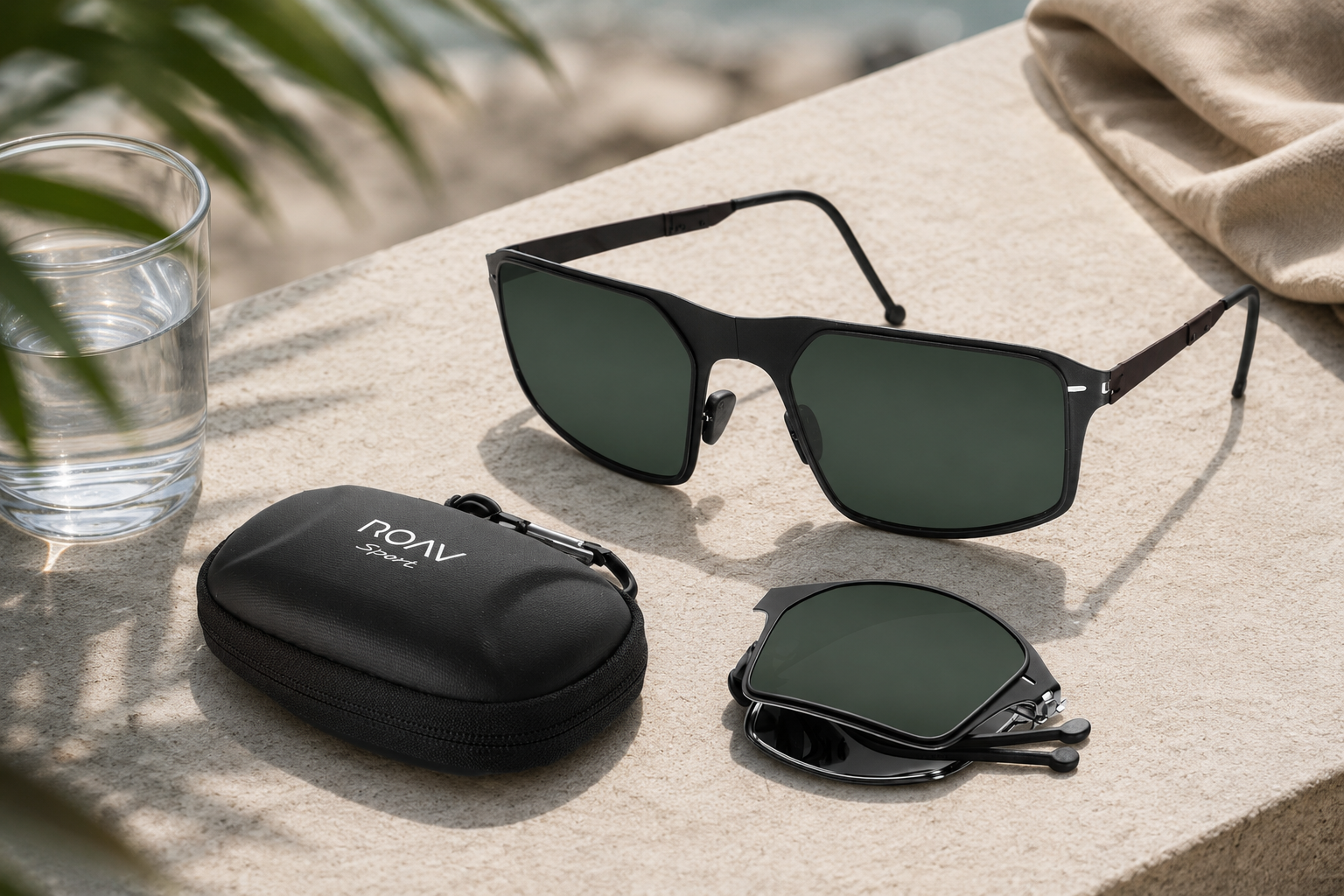
Altijd bij je, altijd beschikbaar. Onze opvouwbare zonnebrillen passen in een compacte case die in je broekzak of jaszak past. Dit lost een van de praktische bezwaren op: als je je gepolariseerde bril niet nodig hebt (bewolkt weer, binnenshuis, tunnels), vouw je hem op en berg je hem weg. En zodra de zon doorbreekt, heb je hem binnen seconden weer op.
Kwalitatieve polarisatie betaalbaar. Alle ROAV-zonnebrillen zijn standaard uitgerust met gepolariseerde glazen en volledige UV400-bescherming. We geloven dat je niet hoeft te kiezen tussen een goede bril en een betaalbare bril.
Bekijk het volledige assortiment op roav-benelux.com en ontdek hoe compact een gepolariseerde zonnebril kan zijn.
Conclusie: Zijn de Nadelen een Reden om Geen Gepolariseerde Bril te Kopen?
Laten we eerlijk zijn: de gepolariseerde zonnebril nadelen zijn reeel, maar voor de meeste mensen niet doorslaggevend. Het ongemak met schermen en het regenboogeffect op autoruiten zijn de meest voorkomende klachten, maar de meeste gebruikers wennen hier snel aan.
De situaties waarin polarisatie niet ideaal is, zoals skieen bij bewolkt weer of als piloot, zijn specifiek genoeg dat ze voor de gemiddelde drager geen dealbreaker vormen. Het verschil in bescherming tegen verblinding bij autorijden, op het water of in de sneeuw is daarentegen enorm.
Onze aanbeveling: kies voor een gepolariseerde zonnebril als standaardbril, maar wees je bewust van de gepolariseerde zonnebril nadelen. En als je een bril wilt die je overal mee naartoe kunt nemen zodat je hem altijd bij de hand hebt, bekijk dan de opvouwbare gepolariseerde collectie van ROAV. Compact, gepolariseerd en altijd binnen handbereik.
Benieuwd naar een betaalbaar merk met kwalitatieve gepolariseerde glazen? Lees onze uitgebreide Polaroid zonnebril gids voor een eerlijke analyse van dit populaire merk.
Veelgestelde Vragen (FAQ)
Kan ik met een gepolariseerde zonnebril mijn telefoon nog wel gebruiken?
Ja, dat kan. Maar afhankelijk van het type scherm en de hoek waaronder je kijkt, kan het beeld donkerder lijken of zelfs tijdelijk verdwijnen. Moderne smartphones met OLED-schermen hebben hier minder last van dan oudere toestellen met LCD-schermen. In de praktijk leer je snel om je telefoon iets te kantelen voor optimaal zicht. Het is een klein ongemak dat voor de meeste mensen geen reden is om af te zien van de voordelen van polarisatie, zoals verminderde verblinding en beter contrast bij buitenactiviteiten.
Wat is het verschil tussen een gepolariseerde en een gewone zonnebril?
Het belangrijkste verschil is dat een gepolariseerde zonnebril een speciaal filter bevat dat horizontaal gereflecteerd licht blokkeert. Een gewone zonnebril vermindert alleen de totale hoeveelheid licht die je ogen bereikt, zonder onderscheid te maken tussen direct en gereflecteerd licht. Hierdoor biedt een gepolariseerde bril aanzienlijk meer bescherming tegen verblinding door weerkaatsing op water, asfalt en sneeuw. Beide typen kunnen dezelfde UV-bescherming bieden. Lees meer over dit verschil in onze uitgebreide gids over gepolariseerde zonnebrillen.
Zijn gepolariseerde zonnebrillen gevaarlijk voor je ogen?
Nee, gepolariseerde zonnebrillen zijn absoluut niet gevaarlijk voor je ogen. Sterker nog: ze bieden juist extra bescherming doordat ze verblindend gereflecteerd licht filteren. Zorg er altijd voor dat je bril ook volledige UV400-bescherming biedt naast het polarisatiefilter. Alle ROAV-brillen combineren polarisatie met UV400-bescherming, zodat je ogen optimaal beschermd zijn tegen zowel ultraviolette straling als hinderlijke schittering.
Wanneer moet ik mijn gepolariseerde zonnebril niet dragen?
Er zijn een paar specifieke situaties waarin je beter kunt kiezen voor een niet-gepolariseerde bril. Als piloot is het dragen van gepolariseerde glazen afgeraden vanwege de interferentie met cockpitinstrumenten. Bij skieen op een bewolkte dag kan polarisatie het contrast verminderen, waardoor je de ondergrond minder goed kunt inschatten. Ook als je beroepsmatig veel met LCD-schermen in de buitenlucht werkt, kan het storend zijn. Voor alle andere dagelijkse situaties, van autorijden tot wandelen en terrasbezoek, is een gepolariseerde bril de betere keuze.
Op zoek naar een goede polaroid zonnebril? Bekijk onze koopgids met de beste gepolariseerde modellen van 2026.
Klaar om jouw bril te vinden?
Ontdek ROAV's opvouwbare, gepolariseerde zonnebrillen. Plat opvouwbaar, overal mee naartoe.
Shop Gepolariseerde zonnebrillen

