
Wayfarer Sunglasses: Complete Guide 2026 [Style, History & Best Brands]
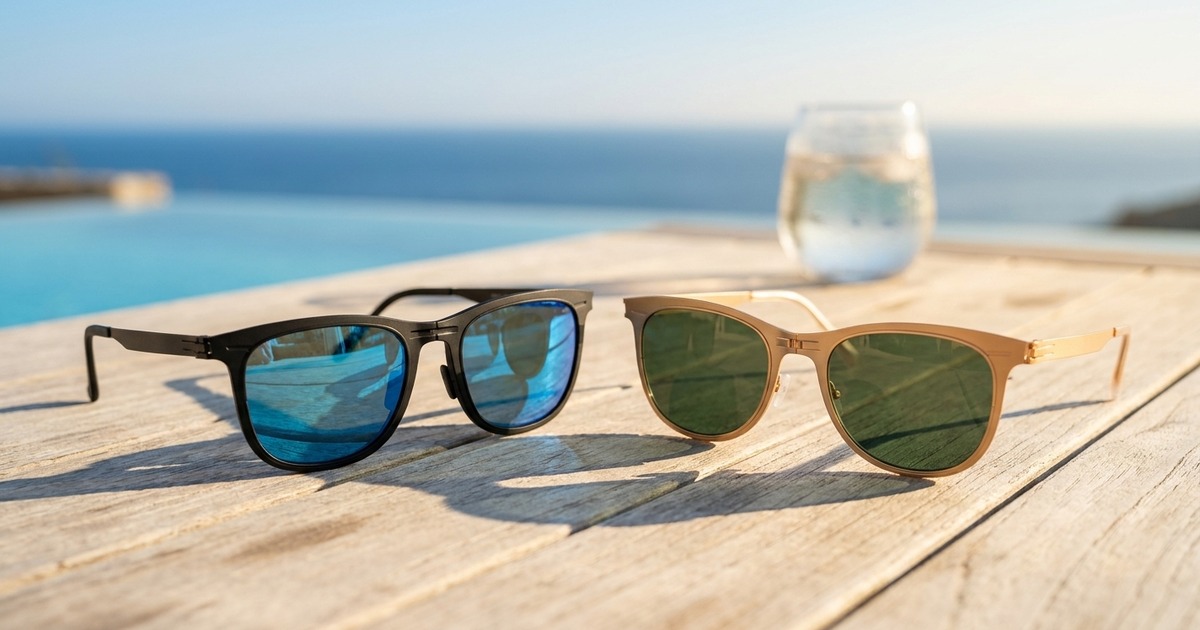
No pair of sunglasses is as recognizable, as timeless and as culturally loaded as wayfarer sunglasses. From the rebellious youth of the 1950s to the style-conscious millennials and Gen Z of today, the Wayfarer has survived every fashion wave and come out stronger. It’s the most-searched eyewear model on the planet.
But what exactly makes the Wayfarer so special? Why would someone in 2026 still buy a frame model designed back in 1952? And which Wayfarer suits your face, style and budget? In this in-depth guide we answer all those questions, and many more.
Whether you’re looking for your first wayfarer, curious how ROAV folds the classic silhouette down to pocket size, or just want to understand the hype: by the end of this article you’ll be a real Wayfarer expert. Let’s get started.
What Are Wayfarer Sunglasses?
The Wayfarer is an eyewear style defined by a set of very specific design elements. Unlike the round or teardrop-shaped sunglasses that dominated up to the 1950s, the Wayfarer broke every convention and introduced an almost geometric, trapezoidal (or inverted-triangle) frame shape you’ve never been able to forget since.
The Defining Features of Wayfarer Sunglasses
What sets a Wayfarer apart from every other sunglasses style? These are the defining traits:
1. Trapezoidal frame
The lenses are wider at the bridge than at the bottom. This gives the pair its signature, slightly forward-tilting look. The top of the frame is straighter and stronger, the bottom slightly narrower, a silhouette you can spot from a thousand meters away.
2. Thick acetate frame
Traditional Wayfarers are made of acetate (a premium plastic), not metal. This material allows bold, thick frames in all sorts of colors and patterns, from classic black to tortoise-shell, red, navy and translucent.
3. Prominent hinge points
The temples attach to distinctive “horns” or hinge points in the upper corners of the frame. This is one of the most recognizable details of the Wayfarer and a design element you won’t find anywhere else.
4. Sturdy, relatively thick temples
A real Wayfarer’s temples are thick and solid, running straight back without the elegant curve of an aviator. They connect to the hinge points with a characteristic metal hinge.
5. Hexagonal or slightly rounded rectangular lenses
The lenses aren’t strictly rectangular but have slightly rounded corners. The top corners are more rounded than the bottom ones, contributing to the signature shape.
6. Compact to mid-size fit
The classic Wayfarer is more modest in size than, say, oversized cat-eye or oversized aviators. That makes it suitable for a broad range of face shapes and sizes.
This combination of traits makes wayfarer sunglasses unique in the eyewear world. There are hundreds of variations and interpretations, but those six elements together make a real Wayfarer.
The History of the Wayfarer: From Rebel to Cultural Icon
The history of the Wayfarer is essentially the history of pop culture in the second half of the 20th century. No other eyewear model has such a direct link to the music, film and social changes of its time.
1952: The Birth of an Icon
The year is 1952. America is in the middle of the baby boom. Rock and roll is about to flip the world. And at optical company Bausch & Lomb, designer Raymond Stegeman is working on a new eyewear design that would change everything.
Stegeman was asked to design sunglasses that would resonate with the new generation of Americans, younger, freer and less formal than the generations before them. Sunglasses of that era were mostly made from metal and had round or oval lenses. They were functional, but definitely not cool.
Stegeman’s answer was radical: a pair made of acetate, with a geometric shape inspired by the new styles in architecture and design of the postwar years. The hinge points were inspired by the shape of a bird spreading its wings. The result was unprecedented: the Ray-Ban Wayfarer, the first model in the world made of plastic instead of metal.
Bausch & Lomb launched the model in 1952 as part of the Ray-Ban Wayfarer collection, and the reactions were initially mixed. Older generations found it too bold, too strong. But the youth? They recognized something in it immediately.
The 1950s and 1960s: Rebels, Rebels
The Wayfarer became the symbol of rebellious youth in the 1950s. When James Dean conquered the silver screen in “Rebel Without a Cause” (1955) with his nonchalant attitude and dark sunglasses, the Wayfarer had its first big cultural moment. Dean’s aura of unbound freedom was exactly the image that fit the model.
It was the start of a long string of cultural associations that would make the Wayfarer indestructible:
- James Dean (1950s): rebellion and freedom
- Buddy Holly (1958): the first rock musician to consistently wear wayfarer sunglasses as part of his image
- John F. Kennedy (early 1960s): when the President of the United States started wearing the Wayfarer, the model gained a layer of presidential prestige
- Bob Dylan (1960s): the troubadour of a generation wore his Wayfarer almost as a literary symbol
- Andy Warhol: the pope of pop art wore his Wayfarer as part of his unchanging trademark
By the 1960s the Wayfarer was so ubiquitous it had become almost a given. And then, in the 1970s, the popularity began to decline.
The Decline and the Revival
The 1970s brought new sunglasses styles that briefly pushed the Wayfarer aside: larger, more theatrical frames, photography-inspired lenses, and the rise of the designer eyewear frame. Wayfarer sunglasses faded into the background.
But in 1982 everything changed. Ray-Ban struck a deal with product placement agency Norm Marshall & Associates: Ray-Ban would pay to have its sunglasses placed in films and TV series. The result? The Ray-Ban Wayfarer appeared in more than 60 films and TV shows during the 1980s.
The two most iconic moments:
The Blues Brothers (1980)
Jake and Elwood Blues, played by John Belushi and Dan Aykroyd, wore their black Wayfarers like a uniform. The pair became an inseparable part of the Blues Brothers image and reached millions of viewers worldwide.
Risky Business (1983)
Tom Cruise danced through the hallway in his underwear with a Wayfarer on his nose. The scene became one of the most iconic film images of the 1980s and sent sales of the Ray-Ban Wayfarer to unprecedented heights. From 18,000 units per year in 1981 to more than 360,000 units in 1983.
So the Wayfarer was back, and bigger than ever.
The 1990s and 2000s: Mainstream and Subculture
In the 1990s and early 2000s wayfarer sunglasses remained a strong presence, but now in the subculture world. Grunge, alternative rock and indie musicians embraced the pair. Kurt Cobain, Rivers Cuomo of Weezer and countless other musicians made wayfarer sunglasses the standard accessory of anyone who wanted to look deliberately uninterested.
At the same time wayfarer sunglasses began conquering the high-fashion world. Designer brands like Persol, Prada and later Tom Ford started making their own interpretations of the wayfarer sunglasses design, more expensive, more exclusive, but clearly inspired by the original.
2026: More Timeless Than Ever
Today the Wayfarer is more secure in its position than ever. It’s simultaneously retro and modern, mainstream and individualist, affordable and prestige. In 2026 we see wayfarer sunglasses coming back in new colors, new materials and new interpretations, but the silhouette stays unmistakable.
The cultural legacy is unmatched: more than 70 years after its introduction, the Wayfarer is still the most recognizable eyewear model in the world.
Why Are Wayfarer Sunglasses Timeless? A Design Analysis
Fashion trends come and go, but wayfarer sunglasses don’t. What’s cool one winter can already feel dated by spring. But the Wayfarer has survived more than seven decades. How is that possible?
Geometric Balance
The Wayfarer’s design is full of subconscious geometric decisions that frame the face flatteringly. The trapezoidal frame shape, wider on top, narrower on the bottom, mirrors the natural proportions of the human face. Most people are slightly wider at the cheekbones than at the chin.
By letting the frame run in the same direction, you create a harmonious line that strengthens the face as a whole. This is no accident. Raymond Stegeman studied face shapes and human proportions extensively in 1952 before finalizing his design.
The Power of Contrast
Wayfarer sunglasses work through contrast. The thick acetate frame is deliberately heavier and more present than the light metal frames that were standard in 1952. That presence, that boldness, lets the pair make a statement without you having to say anything.
Ironically, that same contrast is what makes the Wayfarer so versatile. A black Wayfarer with a white shirt is just as stylish as the same pair with a worn-out jean jacket. The frame is strong enough to hold its own in any context.
Cultural Capital
There’s a psychological element too. Wayfarer sunglasses carry seven decades of cultural associations. When you put on a Wayfarer, you (subconsciously) wear a piece of James Dean, John F. Kennedy, the Blues Brothers and Tom Cruise. That’s a weight no new eyewear model can match.
This cultural capital makes wayfarer sunglasses self-referential: it’s cool because it has always been cool, and it’ll stay cool because it’s cool.
Universal Fit
A practical but crucial point: the Wayfarer is designed to fit almost any face. The trapezoidal shape, unlike round or cat-eye frames, isn’t oriented specifically to one face type. The width of the frame and the subtle rounding of the corners make it adaptive across different face shapes.
ROAV Wayfarer-Style Sunglasses: Lennox vs Freddy
At ROAV Eyewear wayfarer sunglasses live on in two distinct models, both part of the Origin collection of foldable sunglasses: the Lennox and the Freddy. Both take the classic 1952 silhouette and rebuild it in featherlight metal that folds flat to just 4.5mm, with polarized lenses as standard.
The two models interpret wayfarer sunglasses each in their own way. The Lennox stays close to the iconic, angular original. The Freddy takes the same DNA and rounds it off into a playful, larger frame. Which one suits you? The comparison below puts them side by side.
Comparison table
| Feature | ROAV Lennox | ROAV Freddy |
|---|---|---|
| Style | Iconic, angular wayfarer | Playful, round wayfarer |
| Lens width | 53 mm | 58 mm |
| Bridge | 20 mm | 18 mm |
| Temple length | 145 mm | 145 mm |
| Frame | Lightweight metal, folds to 4.5mm | Lightweight metal, folds to 4.5mm |
| Lenses | Polarized, full UV protection | Polarized, full UV protection |
| Colorways | Gunmetal G15, Matte Black with Blue Mirror, G15, Grey Gradient or Silver Mirror lenses | Brush Gold G15, Brush Silver Dark Grey, Matte Black with Grey Gradient or Silver Mirror lenses |
| Character | Timeless rebel | Cheerful statement |
| Best for | Daily use, work to weekend | Bold looks, summer outfits |
| Price | €199 | €199 |
When to Pick the Lennox
The ROAV Lennox is the best pick if:
- You want the classic wayfarer look that works in almost any situation, from casual to semi-formal
- You love the angular, geometric original silhouette
- You have a smaller or average face (53mm lens width)
- You want one pair that everyone recognizes and respects
When to Pick the Freddy
The ROAV Freddy is the best pick if:
- You want the wayfarer DNA with a softer, rounder twist
- You have a wider or longer face (58mm lens width)
- You love warm finishes like Brush Gold or Brush Silver
- You want a pair that brings a smile to your face, and everyone else’s
The Bottom Line
Both models share the same foldable metal construction, polarized lenses and price point. The choice comes down to character: pick the Lennox for the timeless, angular classic, pick the Freddy for the playful, round interpretation. Prefer a teardrop-shaped metal frame instead? Then take a look at our pilot sunglasses guide.
Do Wayfarer Sunglasses Suit Your Face Shape?
The Wayfarer is known for its broad adaptability across face shapes. But there are nuances. Here’s our in-depth advice per face shape. Also read our sunglasses by face shape guide for a complete overview of every eyewear style.
Oval Face
Suitability: Excellent
The oval face, with its balanced proportions and softly rounded lines, is the gold standard for sunglasses. Almost every eyewear style suits an oval face, and the Wayfarer is no exception.
Recommendation: Pick the classic size. Oversized Wayfarers can overwhelm an oval face; a compact frame like the ROAV Lennox (53mm) is ideal. All colors and variants are possible.
Round Face
Suitability: Good to excellent
For round faces with soft, full contours and no sharp angles, the Wayfarer is one of the best possible picks. The rectangular, geometric frame shape creates contrast with the round face lines and visually adds definition and structure.
Recommendation: Pick an angular wayfarer like the ROAV Lennox. The straighter, sharper corners help make a round face look slimmer and more defined. Avoid Wayfarers that are too small. They emphasize the roundness.
Square Face
Suitability: Good
Square faces with a strong jaw, wide cheekbones and a wide forehead of similar width can work with a Wayfarer. The important thing is picking the right variant.
Recommendation: A rounder wayfarer like the ROAV Freddy works better than a strictly angular frame for square faces. The softly rounded lenses soften the angular face lines. Pick a frame that isn’t too wide. The frame width should roughly equal your face width, not exceed it.
What to avoid: Oversized Wayfarers on a square face can amplify the sharp corners and make the face look bigger and blockier.
Heart-Shaped Face
Suitability: Good
The heart-shaped face (wide forehead, narrowing clearly toward the chin) benefits from glasses that draw attention downward and make the forehead look less wide.
Recommendation: Pick a Wayfarer slightly narrower than your forehead, like the compact ROAV Lennox (53mm). Lighter finishes, think Gunmetal, Brush Gold or Brush Silver, are visually less dominant than black and work better on heart-shaped faces.
Long or Narrow Face
Suitability: Good
For longer, narrower faces, wider sunglasses are the best pick. Horizontal width adds visual volume and creates balance.
Recommendation: Pick a wider wayfarer like the ROAV Freddy (58mm). The broad lens shape adds the desired horizontal width. Avoid compact or smaller Wayfarers, which emphasize the face’s length.
Rectangular Face
Suitability: Excellent
Rectangular faces, long with straight sides and similar width on top and bottom, are ideal for the Wayfarer. The trapezoidal shape complements rectangular face contours perfectly.
Recommendation: Both the ROAV Lennox and the Freddy work excellently. You can also wear wider models without issues. This might just be the ideal face shape for a Wayfarer.
Best Wayfarer Sunglasses 2026: The ROAV Models
The market for Wayfarer sunglasses is huge. But if you want the classic silhouette combined with real innovation, the foldable wayfarer-style models from ROAV Eyewear are in a category of their own. The idea is simple but brilliant: what if you could combine the classic Wayfarer aesthetic with a frame that folds down to a size that fits in your chest pocket or wallet?
ROAV’s foldable models combine the timeless silhouette with a revolutionary thin-folding system. The frame folds flat to just 4.5mm, thinner than most smartphones.
ROAV Lennox: The Icon, Modernized
The flagship in the Wayfarer category is the ROAV Lennox: the iconic Wayfarer silhouette, modernized in lightweight metal and foldable to 4.5mm. A contemporary take on the 1952 classic, with a 53mm lens width that suits most faces.
What makes the Lennox unique:
- The classic silhouette: the angular, trapezoidal wayfarer shape in its purest form
- Polarized lenses as standard: every Origin frame ships with polarized lenses
- Five colorways: from Gunmetal with G15 lenses to Matte Black with Blue Mirror, G15, Grey Gradient or Silver Mirror lenses
- Compact fit: 53mm lens width, 20mm bridge, 145mm temples
ROAV Freddy: The Playful Round Wayfarer
The ROAV Freddy is the second wayfarer interpretation in the Origin collection: a playful, round wayfarer that guarantees a cheerful look. With its 58mm lens width it’s the pick for wider or longer faces, or for anyone who wants a bolder statement.
What makes the Freddy unique:
- Round wayfarer shape: the recognizable DNA, softened into a friendly, playful frame
- Warm finishes: Brush Gold and Brush Silver next to the classic Matte Black
- Polarized lenses as standard with full UV protection
- Generous fit: 58mm lens width, 18mm bridge, 145mm temples
What Both Models Share
Features of ROAV Wayfarer-style models:
- Foldable to 4.5mm: No case needed, fits literally anywhere
- Ultra-light: Significantly lighter than traditional acetate frames
- UV400 protection: Full UVA/UVB blocking
- Scratch-resistant nylon lenses: Last longer in daily use
- Sustainable production: Recyclable packaging, responsible material choices
Why pick ROAV?
For the traveller, the commuter, the active person who wants their pair always within reach but never wants to lug around a case. ROAV solves the age-old problem: how do you take a quality Wayfarer with you easily? Fold it up, slip it in your pocket, and forget about it, until you need it.
Want to know more? Read our foldable sunglasses guide.
Other Names in the Wayfarer Landscape
Of course ROAV isn’t the only player. Ray-Ban created the original design in 1952 and still carries it today, Persol builds hand-made Italian interpretations, and luxury houses like Tom Ford deliver their own takes on the theme. For an overview of the full market, check our complete sunglasses brands guide.
Men’s Wayfarer Sunglasses: Style Tips and Popular Combinations
The men’s Wayfarer is one of the most versatile accessories you can own. It works on almost any occasion and any clothing style. But there are nuances that make the difference between “good choice” and “perfect choice”.
The Classic Men’s Wayfarer Look
The most timeless combination for men is simple: black Wayfarer frame + G-15 (dark green) or gray lenses. This is the combination James Dean wore, Tom Cruise wore, and that in 2026 is still just as relevant as in 1955. The ROAV Lennox in Matte Black with G15 lenses is exactly this combination, in a foldable frame.
Why black works:
Black is neutral but not boring. It’s present without being dominant. Black contrasts well with almost any skin tone and works with any hair color. It’s the safest choice that simultaneously never disappoints.
Pair the black Wayfarer with:
- White or light blue shirt (classic and stylish)
- Denim jacket + white T-shirt (casual chic)
- Navy suit (for semi-formal occasions)
- Leather jacket (rock and roll vibes)
The Tortoise-Shell Wayfarer for Men
The tortoise-shell Wayfarer, brown and amber tones that mimic tortoise, is the warm, slightly more bohemian counterpart to the black variant. It feels slightly friendlier and quieter, but has that same unmistakable Wayfarer presence.
Perfect with:
- Camel or khaki clothing
- Dark brown and cognac leather accessories
- Summer outfits in earth tones
- Business casual clothing
Color and Material Experiments for Men
In 2026 we see growing interest among men in less traditional Wayfarer colors:
Matte blue: Modern, bold, eye-catching without being loud
Translucent: Minimalist and modern, increasingly popular with younger generations
Matte black: Subtler than glossy black, delivers a more industrial character
Dark blue: Timeless, yet not the standard black
Style Tips for the Men’s Wayfarer Wearer
- Size is crucial: An oversized Wayfarer (especially on a smaller face) loses its elegance. Test the pair, the top should sit roughly at the level of your eyebrows, not above.
- One statement per outfit: The Wayfarer is already eye-catching. Don’t combine it with too many other show-stoppers. Let the pair speak.
- Match your personality: The Wayfarer projects a certain nonchalant self-confidence. Wear it with that same energy.
- Polarized for driving: If you wear the Wayfarer often in the car, pick polarized lenses. Reflections on road surfaces and dashboards are strongly reduced. Read more about polarized sunglasses.
For more inspiration, tips and model advice for men: check our in-depth men’s sunglasses guide.
Women’s Wayfarer Sunglasses: Style Tips and Trends 2026
The women’s Wayfarer market has grown explosively in recent years. Where the Wayfarer was long seen as primarily “men’s eyewear”, it’s now one of the most popular women’s models. Rightly so. The strong, geometric shape gives something fearless and self-assured to any look.
The Power of the Wayfarer for Women
The Wayfarer gives women a sense of identity that more subtle eyewear models don’t always deliver. It says: “I know who I am.” It can instantly upgrade a look from ordinary to memorable.
That’s probably why so many strong women across the decades have embraced the Wayfarer: Audrey Hepburn (who also loved bold eyewear), Gwen Stefani, Rihanna, Adele and countless other artists and actors.
Popular Women’s Wayfarer Styles in 2026
Classic black, the universal choice
Can have a more feminine look than you’d think, depending on how you pair it. Black Wayfarer + dress = unexpectedly elegant. Black Wayfarer + maxi coat = power look.
Tortoise-shell, warm and versatile
The most popular color for women. The warm brown and amber tones are universally flattering and pair with almost any skin tone. Tortoise-shell is the “nude” of the eyewear world, the basic model that goes with everything.
Pastel colors, the trendy choice of 2026
Light blue, mint green, lavender and soft pink Wayfarers are everywhere this year. They add a playful, fresh character to any look and are perfect for spring and summer.
Translucent, minimalist and modern
The translucent frame is the choice of the style-conscious minimalist. It stands out precisely through its restraint and delivers a fresh, modern character.
Styling Tips for the Women’s Wayfarer
Hair pairs with your pair:
- Ponytail or updo lets the pair speak, no distractions
- Loose hair can work beautifully with a tortoise-shell Wayfarer
- Curls + colorful Wayfarer = bohemian energy
Outfit strategies:
- Casual: Jeans + white T-shirt + tortoise Wayfarer + sneakers = perfect weekend outfit
- Summer: Summer dress + black Wayfarer + sandals = effortlessly chic
- Office chic: Blazer + trousers + subtle Wayfarer = professional authority
- Evening: Black dress + black Wayfarer = modern and mysterious
Lipstick and Wayfarer:
The Wayfarer pairs surprisingly well with a classic red lipstick. The frame gives the face structure; the lipstick adds the dramatic element.
Women’s Wayfarer Sunglasses: Sizing
Watch the size when picking a women’s Wayfarer:
- Smaller face: ROAV Lennox (53mm), the compact angular wayfarer
- Average face: ROAV Lennox (53mm) or ROAV Freddy (58mm), depending on how bold you want to go
- Wider face: ROAV Freddy (58mm), the larger round wayfarer
For personal style advice per face shape, read our women’s sunglasses guide and sunglasses by face shape guide.
What to Check Before Buying Wayfarer Sunglasses
Wherever you buy your Wayfarer, quality matters. Cheap pairs rarely deliver the promised UV protection and can damage your vision long-term. Here’s what to check before you buy:
1. UV400 Protection
The single most important spec. UV400 means the lenses block both UVA and UVB radiation completely. Dark lenses without UV protection are worse than no sunglasses at all: your pupils widen behind the dark glass and let in more harmful radiation. All ROAV sunglasses, including the Lennox and Freddy, offer full protection against harmful UV rays.
2. CE Marking
In Europe, sunglasses must carry a CE marking on the lenses or packaging. No CE marking means no guaranteed protection standard. Walk away.
3. Hinge Quality
Good hinges are solid, made of quality metal, and move smoothly with a slight resistance. They don’t wobble or shake. On a foldable frame like ROAV’s this is even more critical: the folding mechanism is used many times a day and has to stay precise for years.
4. The Polarized Lens Test
If you’ve bought a polarized pair: test it by looking at your phone or laptop screen while slowly rotating the sunglasses. Genuine polarized lenses will darken or even fully blacken at a certain angle. Fake polarized lenses don’t change anything. Every ROAV Origin frame, including both wayfarer models, passes this test: polarization is standard.
5. Warranty and Service
A serious brand stands behind its product with at least one to two years of warranty and reachable customer service. Check the warranty terms before you buy, especially for moving parts like hinges and folding mechanisms.
Care and Maintenance of Your Wayfarer Sunglasses
A well-cared-for Wayfarer can literally last decades. Ray-Ban frames from the 1960s are still proudly worn today. Here’s how to keep yours in perfect condition.
Daily Cleaning
The biggest enemy of your lenses is the wrong way of cleaning. Many people instinctively grab their shirt or a napkin. This causes microscopic scratches that build up to cloudy, dull lenses.
The right way:
- Rinse the lens first under lukewarm water (removes dust particles that would otherwise scratch the glass)
- Add a drop of dish soap or use a lens cleaning spray
- Move gently over the lens with your fingertip
- Rinse thoroughly with clean water
- Pat or wipe dry with a clean microfiber cloth, never paper, never fabric
What to never use: Paper towels, tissues, your shirt, acetone or all-purpose cleaner. All these materials damage lens coatings or cause scratches.
Storage
The golden rule: When you’re not wearing the pair, it’s in its case. Always. No exceptions. Foldable models like the ROAV Lennox and Freddy are the exception that proves the rule: folded flat to 4.5mm they’re designed to live safely in your pocket.
Additional storage tips:
- Never set the pair down lenses-first
- Don’t leave the pair in a hot car (heat damages coatings and can warp acetate or pop lenses out)
- Never store with keys, coins or other hard objects
- A hard case protects better than a soft pouch
Hinge and Temple Maintenance
Check every few months whether the hinge screws are still tight. With regular use they tend to vibrate slightly loose.
At most opticians you can get free service for:
- Tightening hinges
- Adjusting or replacing nose pads
- Professional ultrasonic cleaning
- Small frame repairs
Pro tip: Bring your Wayfarer to your optician at least once a year for a free check-up and cleaning. Many opticians offer this service even if you didn’t buy the pair from them.
Acetate Care: Specifically for Wayfarers
Traditional Wayfarers are made of acetate, and that material needs a few extra care points. Wearing a metal wayfarer like the ROAV Lennox or Freddy? Then you can skip this part:
- Avoid prolonged exposure to direct sunlight when the pair isn’t being worn. This can slowly discolor the acetate
- Never use alcohol-based products on the frame. This attacks acetate
- For white deposits on the frame: have an optician treat it
FAQ: Frequently Asked Questions About Wayfarer Sunglasses
What exactly are Wayfarer sunglasses?
Wayfarer sunglasses are an eyewear style with a distinctive trapezoidal acetate frame, wider on top, narrower on the bottom, with prominent hinge points in the upper corners. The design was created in 1952 by Raymond Stegeman for Ray-Ban and has been one of the most iconic eyewear models in the world ever since.
What’s the difference between the ROAV Lennox and the ROAV Freddy?
The ROAV Lennox (53mm) is the iconic, angular wayfarer in lightweight metal. The ROAV Freddy (58mm) is the playful, round interpretation of the same DNA. Both fold flat to 4.5mm, come with polarized lenses as standard and cost €199. The choice depends on your face size and personal preference.
Do Wayfarers suit every face?
The Wayfarer suits almost every face. It’s one of the most universal eyewear styles. The most important thing is the size: the pair must be proportional to your face. For smaller and average faces: the ROAV Lennox (53mm). For wider or longer faces: the ROAV Freddy (58mm). Read our sunglasses by face shape guide for detailed advice.
Are ROAV wayfarer sunglasses polarized?
Yes. All frames in the ROAV Origin collection, including the wayfarer-style Lennox and Freddy, are equipped with polarized lenses as standard and offer full protection against harmful UV rays. You never pay extra for polarization.
Why pick a foldable wayfarer?
A foldable wayfarer like the ROAV Lennox or Freddy folds flat to 4.5mm and slips into your chest pocket, jeans pocket or wallet. No bulky case, no pair left at home, no sunglasses crushed in your bag. You get the timeless wayfarer look with the portability of a credit card.
Can I get Wayfarer Sunglasses with prescription lenses?
Yes. Almost every Wayfarer can be fitted with corrective lenses, single vision, multifocal or polarized. Costs vary from +€80 to +€400 on top of the frame price. Discuss the options with your optician. More info in our prescription sunglasses guide.
Are polarized Wayfarer lenses better?
For many use cases, yes. Polarized lenses eliminate blinding glare from reflective surfaces (water, snow, wet roads). They deliver sharper vision, more contrast and less eye fatigue. The only downside: some LCD screens become harder to read. For driving and outdoor sports, polarized lenses are excellent. Read our polarized sunglasses guide for more.
What’s the difference between a Wayfarer and a Clubmaster?
The Wayfarer has a full acetate frame in trapezoidal shape. The Clubmaster has a half-frame: acetate on the upper portion (above the lenses) and metal on the bottom. The Clubmaster reads slightly more intellectual and “prep school”; the Wayfarer is more rebellious and broader in use. Both are timeless.
Are Wayfarer sunglasses suitable for sport?
The classic Wayfarer is primarily a lifestyle and fashion pair, not designed for intense sport. The heavier acetate frames sit less safely during fast movements. For sport, ROAV models (lightweight, foldable) are a better pick, or dedicated sports glasses from brands like Oakley. Also read our pilot sunglasses guide for lighter alternatives better suited to active use.
Conclusion: Find Your Perfect Wayfarer Sunglasses
After more than 70 years the Wayfarer is still one of the most powerful accessories you can wear. It embodies timeless style, rebel self-confidence and cultural awareness, all in one acetate frame.
In this guide we’ve covered everything: the rich history of the design by Raymond Stegeman in 1952 and its iconic culture moments with James Dean, JFK, the Blues Brothers and Tom Cruise; the anatomy of the design and why it works so universally; how to pick it per face shape; the ROAV wayfarer-style models Lennox and Freddy compared in detail; what to check before buying; and how to keep your pair in great condition for years.
Top Recommendations per Category (2026)
| Category | Model | Price |
|---|---|---|
| Best all-round wayfarer | ROAV Lennox (Matte Black, G15) | €199 |
| Best statement wayfarer | ROAV Freddy (Brush Gold, G15) | €199 |
| Best for smaller faces | ROAV Lennox (53mm) | €199 |
| Best for wider faces | ROAV Freddy (58mm) | €199 |
| Best for travel | Lennox or Freddy, both fold to 4.5mm | €199 |
| Best polarized | Every ROAV Origin frame, polarized as standard | €199 |
The Ultimate Wayfarer Checklist
Before you buy, check the following:
- UV400 protection guaranteed
- CE marking present on the lenses or packaging
- Comfortable fit, top of frame at eyebrow level
- Frame width proportional to your face width
- Hinges move smoothly with slight resistance
- Bought from an authorized dealer
- Ships with case and microfiber cloth
- Minimum 1-2 year warranty
Invest in quality, pick real UV protection, and find a model that matches your unique style and lifestyle. A good Wayfarer is an investment that lasts for years, never goes out of fashion, and protects your eyes on every occasion.
Ready for your next Wayfarer moment? Check the ROAV Lennox and the ROAV Freddy for an innovative, foldable take on the timeless Wayfarer aesthetic, always ready for your next adventure.
Related articles:
- Polarized Sunglasses: The Ultimate Guide
- Pilot Sunglasses Guide 2026: Best Aviator Models
- Sunglasses by Face Shape: Perfect Match Guide
- Men’s Sunglasses Guide 2026
- Women’s Sunglasses: Complete Buying Guide
- Prescription Sunglasses: Complete Guide 2026
Ready to find your pair?
Explore ROAV's foldable, polarized sunglasses. Fold flat, take them anywhere.
Shop Wayfarer sunglasses

